
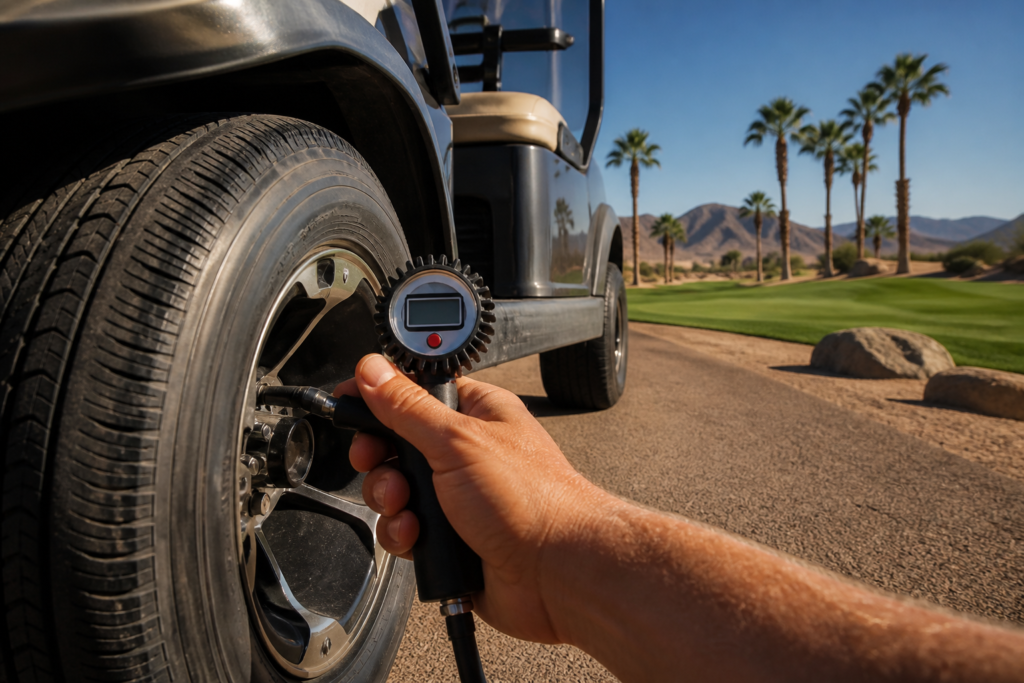
Golf Cart Tire Pressure: 7 Essential Secrets for Phoenix Owners to Boost Performance
Golf Cart Tire Pressure is a critical, yet often overlooked, aspect of golf cart maintenance that directly impacts performance, safety, and the longevity of your vehicle. For Phoenix golf cart owners, understanding and maintaining optimal tire pressure is not just a recommendation; it’s an essential practice given the unique climate and terrain of Arizona. Proper inflation ensures your cart handles smoothly, maximizes battery life or fuel efficiency, and keeps you safe on the course or around your community.
In this comprehensive guide, we will unlock the secrets to mastering your golf cart’s tire pressure. We’ll cover everything from identifying the correct PSI for your specific model to understanding the profound effects of under- and over-inflation. By the end, you’ll have the knowledge to significantly boost your golf cart’s performance and extend its lifespan, ensuring every ride is smooth and efficient.
Key Takeaways
- Discover the precise Golf Cart Tire Pressure recommendations for various models and how to locate them.
- Learn the accurate methods for measuring tire pressure, avoiding common mistakes that can compromise safety and performance.
- Understand the critical role proper Golf Cart Tire Pressure plays in extending tire life, enhancing handling, and improving efficiency.
- Identify the dangers of both underinflated and overinflated tires, including their impact on wear, stability, and overall cart health.
- Master seasonal adjustments for Golf Cart Tire Pressure, especially vital for the extreme temperature fluctuations in Phoenix.
- Explore where to find reliable golf cart tires and professional services for optimal maintenance.
Understanding Optimal Golf Cart Tire Pressure for Phoenix’s Climate
The foundation of excellent golf cart performance begins with the right Golf Cart Tire Pressure. For most standard golf carts, the recommended tire pressure (PSI) typically falls between 18-22 PSI. However, this is a general guideline. The exact optimal pressure can vary significantly based on your specific golf cart model, tire type, and intended use.
It is crucial to always refer to your golf cart’s owner’s manual for the manufacturer’s official PSI recommendation. This information is also often printed on the tire’s sidewall, though the sidewall typically lists the maximum cold inflation pressure, not necessarily the recommended operating pressure. For example, a heavy-duty utility cart might require a slightly higher PSI than a lightweight recreational model.
Locating Your Specific Golf Cart Tire Pressure Recommendation
To find the official PSI recommendation for your specific golf cart model, start by checking the owner’s manual. If the manual is unavailable, look for a sticker or placard on the cart itself, often located on the dashboard, inside the glove compartment, or near the battery compartment. This label will provide the manufacturer’s recommended Golf Cart Tire Pressure for your specific model, ensuring you maintain optimal performance and safety.
For all-terrain golf cart tires, specific guidelines often differ from standard street tires. All-terrain tires are designed for varied surfaces and may have a wider recommended PSI range to allow for adjustments based on terrain. Lower pressure can provide better traction on soft surfaces like sand (common in some desert areas around Phoenix), while higher pressure is better for hard-packed trails. Always consult the tire manufacturer’s specifications for these specialized tires.
How Load Capacity Impacts Golf Cart Tire Pressure
The load capacity or number of passengers significantly impacts the optimal Golf Cart Tire Pressure. A cart consistently carrying heavier loads or multiple passengers will require slightly higher pressure within the recommended range to maintain stability and prevent excessive tire deflection. Conversely, a cart primarily used by a single driver for light tasks might perform best at the lower end of the recommended PSI. Adjusting for load helps prevent uneven wear and improves handling.
Phoenix’s extreme temperatures also play a role. Hot asphalt can cause tire pressure to increase, so checking tires when they are cold (before driving) is essential for accurate readings. This proactive approach ensures your golf cart tires are always ready for the Arizona heat.
Optimize Your Golf Cart Tire Pressure with PHOENIX GOLF CAR SUPERSTORE
Ensure your golf cart performs flawlessly and safely with expert tire maintenance services. Our certified technicians provide precise Golf Cart Tire Pressure checks and adjustments.
How to Accurately Measure Golf Cart Tire Pressure
Accurately measuring your Golf Cart Tire Pressure is a straightforward process, but it requires the right tools and a consistent approach. Using a reliable tire pressure gauge is paramount. Digital gauges offer precise readings, while traditional stick gauges are durable and easy to use. The key is to check your tires when they are cold, meaning they haven’t been driven for at least a few hours, or ideally, overnight.
To measure, simply remove the valve stem cap, press the gauge firmly onto the valve stem until the hissing sound stops, and read the displayed PSI. Compare this reading to your golf cart’s recommended pressure. Repeat this process for all four tires, and don’t forget the spare if your cart has one. If the pressure is too low, add air; if it’s too high, release air by pressing the small pin inside the valve stem.
Choosing the Best Tire Pressure Gauge for Your Golf Cart
For golf cart tires, a standard automotive tire pressure gauge works perfectly. However, investing in a high-quality digital gauge can offer greater accuracy and ease of reading. Look for a gauge that provides readings in 1 PSI increments for precise adjustments. Some gauges also feature a bleed valve, allowing you to easily release excess air if you’ve overinflated the tire.
Common mistakes to avoid when checking Golf Cart Tire Pressure include checking hot tires, not checking all tires (including the spare), and using an old or damaged gauge. Hot tires will give an artificially high reading, leading to underinflation once they cool down. Consistency and attention to detail are key to accurate measurements.
Regular checks are particularly important in Phoenix, where significant temperature swings between day and night can cause tire pressure to fluctuate. A tire that was perfectly inflated in the cool morning might be underinflated by the hot afternoon, impacting your ride quality and safety.
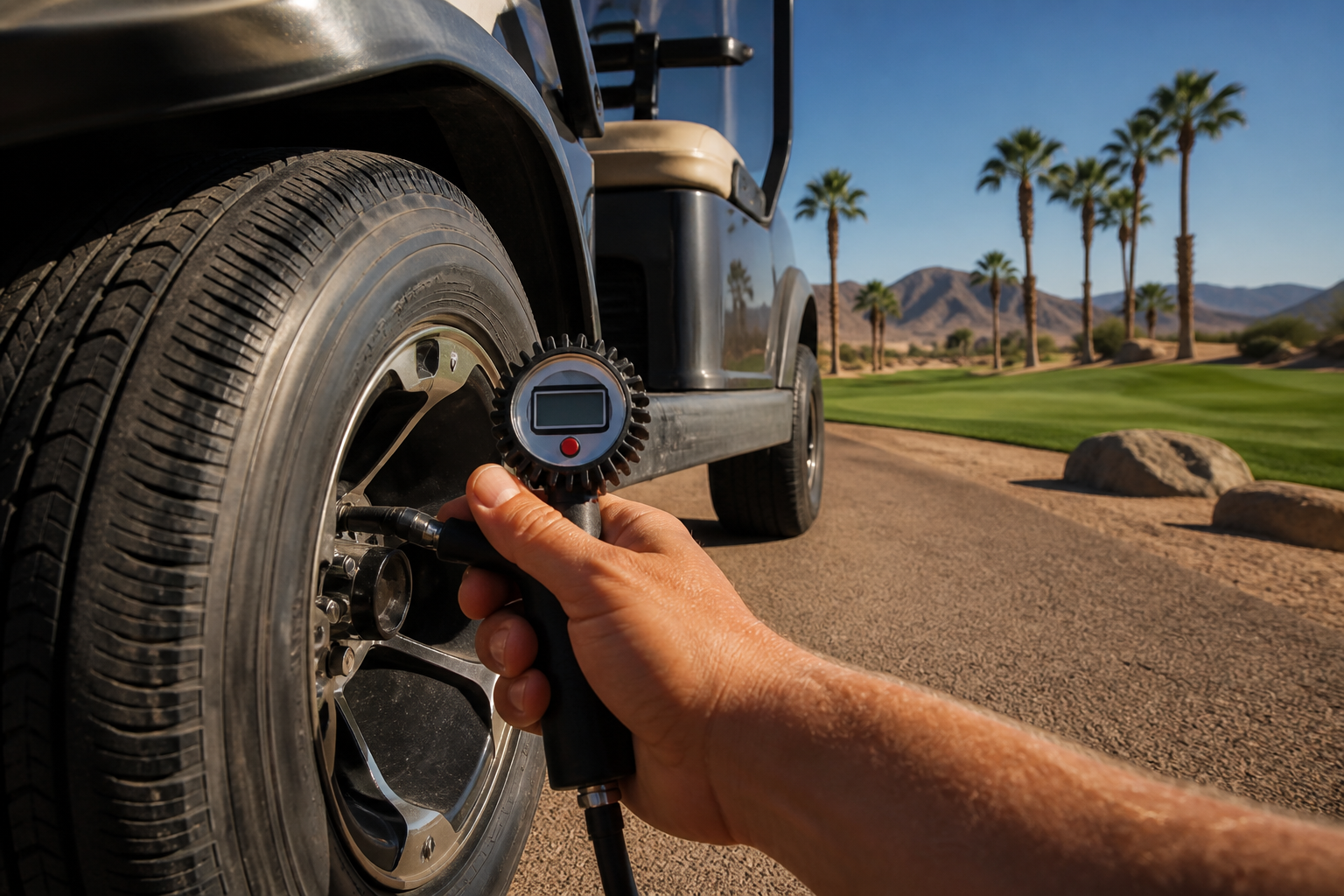
The Critical Impact of Golf Cart Tire Pressure on Performance and Longevity
Maintaining the correct Golf Cart Tire Pressure is not just about a smooth ride; it’s fundamental to the longevity of your tires and the overall performance of your golf cart. Proper inflation ensures that the tire’s tread makes even contact with the ground, distributing wear uniformly across the tire surface. This prevents premature wear on specific parts of the tire, significantly extending its lifespan and saving you money on replacements.
Beyond tire life, optimal pressure dramatically improves your cart’s handling, stability, and braking effectiveness. When tires are correctly inflated, they provide the intended grip and responsiveness, making steering easier and more predictable. This is especially important for navigating golf courses, trails, or residential streets in Phoenix, where sudden turns or stops may be necessary.
Consequences of Improper Golf Cart Tire Pressure
Both underinflation and overinflation of your golf cart tires carry significant risks and consequences. Underinflated tires lead to increased rolling resistance, which means your cart’s motor or engine has to work harder. For electric golf carts, this translates to reduced battery range, while gas carts will experience lower fuel efficiency. Moreover, underinflation causes excessive heat buildup within the tire, increasing the risk of tire damage, tread separation, and even blowouts, particularly dangerous in Phoenix’s summer heat.
Overinflated tires, on the other hand, reduce the tire’s contact patch with the ground. This decreased contact area means less traction, which can compromise braking effectiveness and overall stability. Overinflation also results in a harsher, less comfortable ride, as the tires absorb less shock. It makes tires more susceptible to damage from impacts and leads to uneven wear in the center of the tread, shortening tire life.
The impact of Golf Cart Tire Pressure on fuel efficiency or battery range is direct and measurable. Underinflated tires create more friction, forcing the cart to expend more energy to move. By simply maintaining the correct PSI, you can noticeably improve your cart’s efficiency, saving on fuel costs or extending your range between charges, a practical benefit for any Phoenix golf cart owner.
Understanding these impacts highlights why consistent monitoring of your Golf Cart Tire Pressure is a non-negotiable part of responsible golf cart ownership.
Maintaining Your Golf Cart Tire Pressure: Essential Tips for Phoenix Owners
Regular maintenance of your Golf Cart Tire Pressure is a simple habit that yields significant benefits. It is recommended to check your tire pressure at least once a month, and ideally before every significant use or long drive. Given Phoenix’s intense heat, frequent checks are even more critical. Temperature fluctuations cause air to expand and contract, directly affecting PSI levels. A tire can lose 1-2 PSI for every 10-degree Fahrenheit drop in temperature, and gain pressure with increases.
Beyond routine checks, understanding when and how to adjust for different conditions is key. For instance, if you’re planning a long trip or carrying a heavier load, a slight increase in pressure (within the manufacturer’s recommended range) can improve stability. Conversely, for very soft, sandy terrain, a slight decrease might offer better flotation, though this should be done cautiously and only if you understand the specific requirements for such conditions.
Seasonal Adjustments for Golf Cart Tire Pressure in Phoenix
Phoenix experiences dramatic seasonal temperature shifts, making seasonal adjustments for Golf Cart Tire Pressure particularly important. During the cooler winter months, your tires may naturally lose pressure, requiring more frequent top-ups. In the scorching summer, the internal pressure will increase, so ensure you always check and adjust when tires are cold to avoid overinflation. A proactive approach to these changes will maintain optimal performance year-round.
When it comes to purchasing reliable golf cart tires with proper pressure specifications, always choose reputable dealers. They can guide you to tires that match your cart’s make and model, as well as your typical usage. High-quality tires designed for golf carts will have clear PSI recommendations and are built to withstand the demands of both the cart and the environment.
Consider visiting a local golf cart superstore for expert advice and a wide selection of tires suitable for Phoenix conditions.
For further reading on general tire maintenance and safety, an authoritative resource like the National Highway Traffic Safety Administration (NHTSA) website offers valuable insights that can be applied to golf cart tires as well.
Professional Golf Cart Tire Pressure Services in Phoenix
While checking your Golf Cart Tire Pressure is a task many owners can perform, sometimes professional assistance is invaluable. For comprehensive tire maintenance, including precise pressure checks, adjustments, and expert advice on tire selection or replacement, contacting a specialized golf cart service center is highly recommended. Technicians at places like PHOENIX GOLF CAR SUPERSTORE have the tools and expertise to ensure your tires are perfectly optimized for safety and performance.
They can also inspect your tires for signs of wear, damage, or improper alignment, which can all be exacerbated by incorrect tire pressure. A professional assessment can identify potential issues before they become costly problems, ensuring your golf cart remains reliable and safe for all your adventures in and around Phoenix. Don’t hesitate to reach out to local experts for any questions or concerns regarding your golf cart’s tires.
Your Invitation to Boost Performance
Mastering your Golf Cart Tire Pressure is not merely a maintenance chore; it’s a strategic move to unlock peak performance, enhance safety, and significantly extend the life of your golf cart and its tires. For Phoenix owners, this knowledge is particularly vital, allowing you to navigate the unique climate and terrain with confidence and efficiency. By consistently applying the essential secrets discussed in this guide, you ensure every ride is as smooth, safe, and enjoyable as possible.
From understanding recommended PSI levels and accurate measurement techniques to recognizing the critical impacts of improper inflation, you now possess the insights to make informed decisions. Remember, a well-maintained golf cart is a reliable golf cart. Take the proactive step today to implement these tips, and experience the remarkable difference optimal Golf Cart Tire Pressure can make for your vehicle.
Frequently Asked Questions About Golf Cart Tire Pressure
What is the recommended tire pressure for a standard golf cart?
For most standard golf carts, the recommended tire pressure (PSI) ranges between 18-22 PSI. Always refer to your golf cart’s owner’s manual or the sidewall of your specific tires for the precise recommendation. Maintaining proper golf cart tire pressure is essential for safe operation and optimal performance.
How do I accurately measure the tire pressure on my golf cart?
To accurately measure your golf cart tire pressure, use a reliable tire pressure gauge when the tires are cold (before driving). Remove the valve stem cap, press the gauge firmly onto the stem, and read the displayed PSI. Compare this to your manufacturer’s recommendation. Repeat for all tires, including the spare if applicable, and reinflate or deflate as needed.
Why is maintaining the correct tire pressure crucial for golf cart longevity?
Maintaining the correct golf cart tire pressure is crucial for several reasons. It ensures even wear across the tire tread, preventing premature replacement. Proper inflation also improves the cart’s handling, stability, and braking performance, contributing to a safer and more enjoyable ride. Neglecting tire pressure can significantly shorten tire life and impact other components.
What are the consequences of underinflated golf cart tires?
Underinflated golf cart tires lead to increased rolling resistance, higher fuel consumption for gas carts, or reduced battery range for electric carts. They also cause excessive heat buildup, leading to tire damage and potential blowouts. Furthermore, underinflation can negatively affect steering response, stability, and cause uneven wear on the outer edges of the tire tread.
What are the dangers of overinflating golf cart tires?
Overinflated golf cart tires can result in a harsh, uncomfortable ride due to reduced shock absorption. More critically, they decrease the tire’s contact patch with the ground, reducing traction and braking effectiveness. This can lead to a loss of control, especially on uneven terrain. Overinflation also makes tires more susceptible to damage from impacts and causes uneven wear in the center of the tread.
How frequently should I check the tire pressure on my golf cart?
It is recommended to check your golf cart tire pressure at least once a month, and ideally before every significant use or long drive. Temperature fluctuations can significantly impact PSI, so regular checks are vital. Consistent monitoring helps you maintain optimal golf cart tire pressure and prevent potential issues.
Does golf cart tire pressure affect fuel efficiency or battery range?
Yes, golf cart tire pressure directly impacts both fuel efficiency for gas carts and battery range for electric carts. Underinflated tires create more rolling resistance, forcing the engine or motor to work harder, which consumes more fuel or drains the battery faster. Maintaining proper golf cart tire pressure can noticeably improve your cart’s efficiency.
Who can I contact for professional golf cart tire pressure checks and adjustments?
For professional golf cart tire pressure checks, adjustments, and comprehensive tire maintenance, contact PHOENIX GOLF CAR SUPERSTORE. Our certified technicians in Pompano Beach, FL, have the expertise to ensure your golf cart tires are perfectly optimized for safety and performance.