
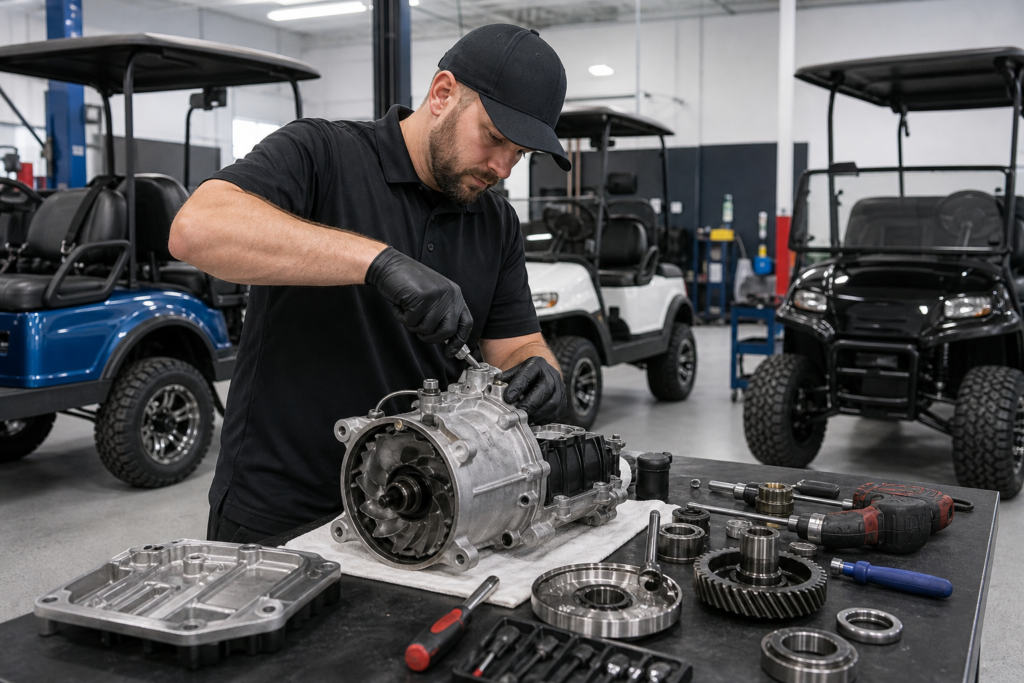
When your golf cart’s smooth operation falters, the issue often points to its vital drivetrain component: the transaxle. Neglecting issues with your golf cart transaxle can lead to more significant, costly repairs and ultimately sideline your ride. For Pompano Beach owners, understanding the signs of trouble and knowing when to seek expert help is crucial for maintaining your cart’s performance and longevity. This guide provides 6 essential secrets to help you diagnose, maintain, and ensure professional golf cart transaxle repair, keeping your cart running reliably across our beautiful South Florida communities.
Key Takeaways
- Recognize the 6 early warning signs of transaxle trouble, from unusual noises to fluid leaks, to prevent extensive damage.
- Learn practical DIY diagnostic steps you can take to identify common golf cart drivetrain problems before they worsen.
- Understand the specific issues that can affect both electric and gasoline golf cart transaxles, including grinding noises and power loss.
- Discover when professional golf cart transaxle repair is essential, including typical costs and repair timelines in Pompano Beach.
- Implement key maintenance practices to extend the life of your golf cart’s transaxle and ensure consistent performance.
- Find out how PHOENIX GOLF CAR SUPERSTORE provides expert, local golf cart transaxle service with certified technicians and mobile repair options.
Tip 1: Spotting the Early Warning Signs of Golf Cart Transaxle Trouble
Your golf cart’s transaxle is a complex assembly of gears, bearings, and seals that transmits power from the engine or motor to the wheels. When this critical component begins to fail, it rarely does so without warning. Recognizing these early symptoms can save you from more extensive and expensive golf cart transaxle repair down the line. For Pompano Beach golf cart owners, being proactive is key to maintaining your cart’s reliability.
Here are the common indicators that your transaxle might be in distress:
- Unusual Noises: Listen for grinding, whining, clunking, or humming sounds coming from the rear of your cart. These noises often intensify when accelerating or decelerating.
- Fluid Leaks: Puddles or drips of oil beneath the rear axle housing are a clear sign of a leaking seal. Ignoring this can lead to insufficient lubrication and severe internal damage.
- Difficulty Shifting or Engaging Gears: If your cart struggles to move forward or reverse, or if the shifter feels unusually stiff, it could indicate internal transaxle issues.
- Loss of Power or Erratic Movement: A failing transaxle might cause your cart to lose power, especially on inclines, or exhibit jerky, inconsistent acceleration.
- Vibrations: Excessive vibrations felt through the floorboard or steering wheel, particularly at higher speeds, can point to worn gears or bearings within the drivetrain.
- Overheating: While less common, an extremely hot transaxle housing after a short drive can signal excessive friction due to low fluid or damaged components.
At PHOENIX GOLF CAR SUPERSTORE, our certified technicians are trained to identify these subtle signs during routine inspections. Early detection allows for targeted repairs, preventing minor issues from escalating into major overhauls.
Tip 2: DIY Diagnosis Steps for Common Golf Cart Transaxle Problems
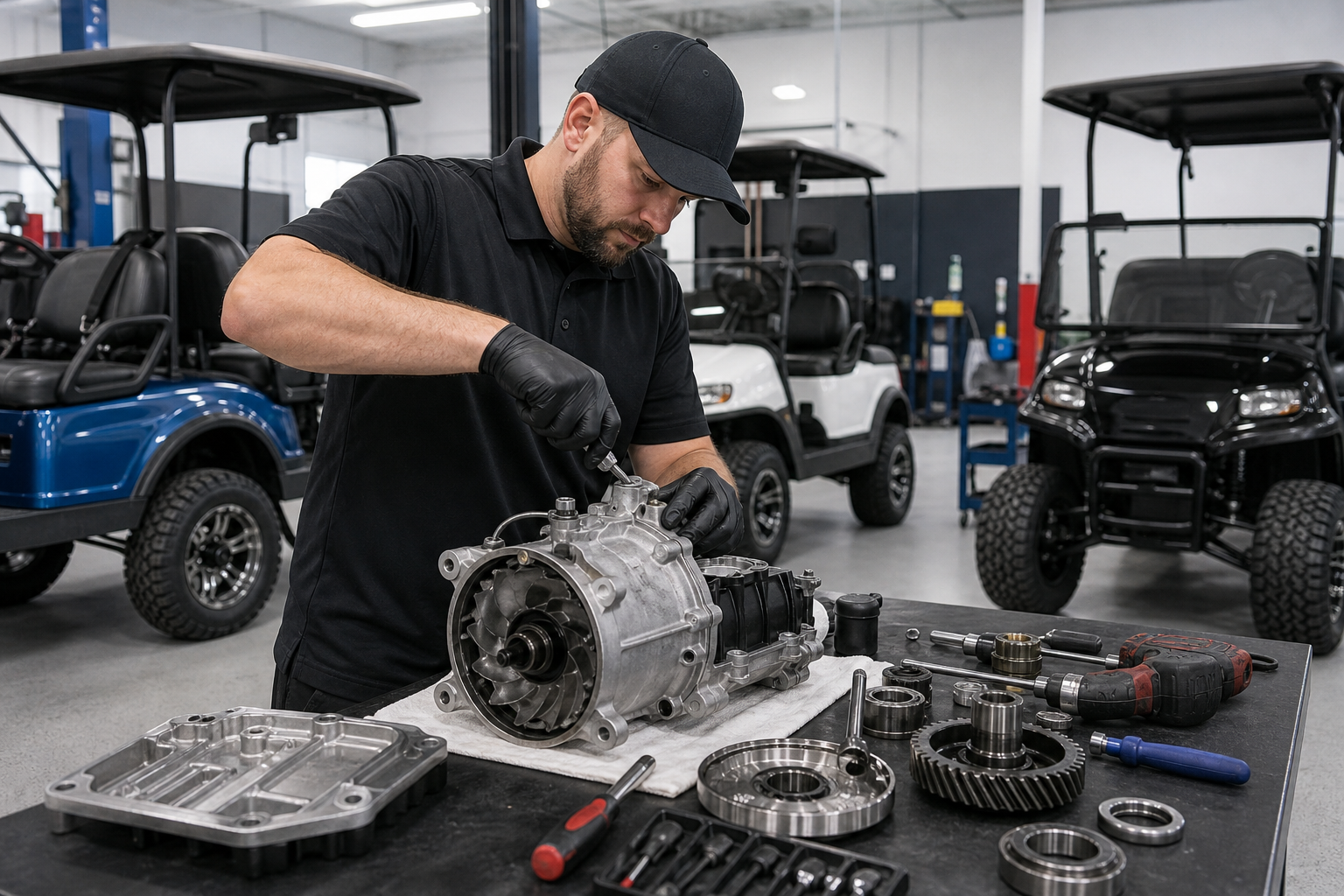
While complex transaxle issues should always be left to professionals, there are several diagnostic steps you can safely perform at home in Pompano Beach. These checks can help you pinpoint the source of a problem or gather crucial information to share with your service technician. Always prioritize safety by working on a level surface, engaging the parking brake, and disconnecting the battery on electric models.
Follow these steps for a preliminary assessment:
- Check Transaxle Fluid Level: Locate the fill plug on your transaxle (usually a square or hex bolt). Remove it and check the fluid level. It should typically be up to the bottom of the fill hole. Low fluid is a common cause of noise and wear. Refer to your golf cart’s owner’s manual for the correct fluid type and capacity.
- Inspect for Leaks: Carefully examine the entire transaxle housing, especially around the axle shafts and input shaft seal, for any signs of oil leaks. A clean cardboard sheet placed under the cart overnight can help identify fresh drips.
- Listen for Noises: With the cart safely jacked up (wheels off the ground, if possible, and supported by jack stands), slowly rotate the wheels by hand. Listen for any grinding, clicking, or binding sounds. Be cautious and ensure the cart cannot accidentally engage.
- Check Axle Play: Gently try to move each rear wheel side-to-side and up-and-down. Excessive play can indicate worn axle bearings or loose components within the transaxle.
- Examine Tire Wear: Uneven tire wear on the rear wheels can sometimes be a secondary symptom of alignment issues caused by a compromised transaxle or axle components.
These DIY checks offer a starting point. If you discover any abnormalities, or if you’re unsure about any step, it’s best to stop and consult with an expert. Our team at PHOENIX GOLF CAR SUPERSTORE can provide a thorough inspection and accurate diagnosis.
Tip 3: Deciphering Grinding Noises and Other Electric Transaxle Issues
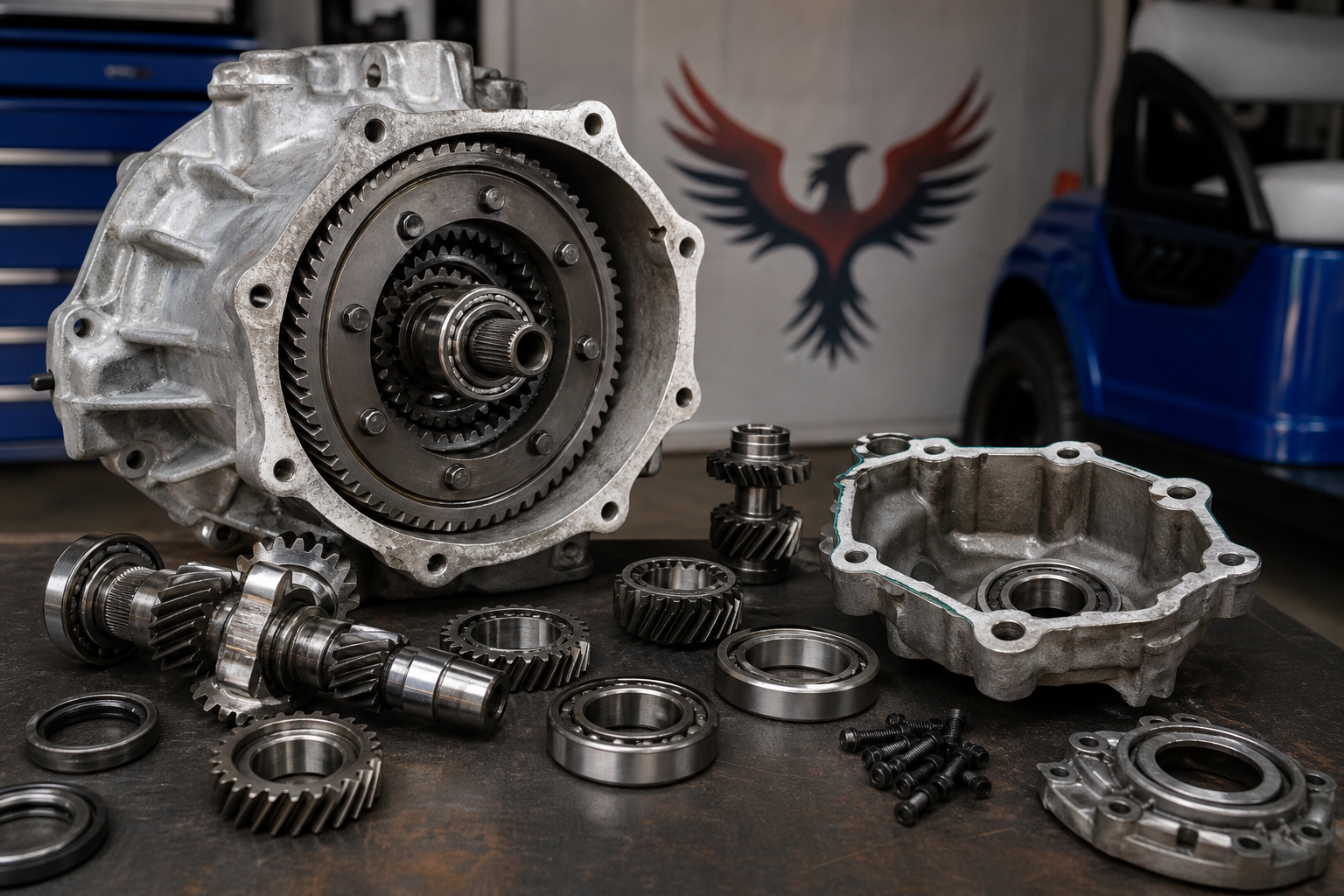
A grinding noise emanating from the rear of your golf cart is one of the most alarming symptoms and almost always points to a serious issue within the transaxle or differential. This sound typically indicates metal-on-metal contact, often due to worn or damaged gears, bearings, or insufficient lubrication. Both electric and gasoline golf carts can experience these issues, though electric models might have specific considerations.
For electric golf cart transaxles, common problems often include:
- Worn or Damaged Gears: Constant torque from the electric motor can eventually wear down the teeth on the differential gears, leading to grinding.
- Failing Bearings: Bearings support rotating shafts and gears. When they wear out, they can cause excessive play, friction, and a distinct grinding or whining noise.
- Input Shaft Spline Wear: The splines connecting the electric motor shaft to the transaxle input can wear down, causing a clunking or grinding sound, especially during acceleration or deceleration.
- Fluid Contamination: If seals fail, water or debris can enter the transaxle fluid, compromising lubrication and accelerating wear on internal components.
Gasoline golf cart transaxles face similar challenges with gear and bearing wear, but they also contend with the vibrations and heat generated by an internal combustion engine. Regardless of your cart’s power source, a grinding noise demands immediate attention. Continuing to operate a cart with this symptom can lead to catastrophic failure, potentially requiring a complete transaxle replacement rather than a more manageable fix for the component. PHOENIX GOLF CAR SUPERSTORE technicians are adept at diagnosing these specific issues for all major brands, including E-Z-GO, Club Car, and Yamaha.
Tip 4: When to Choose Professional Golf Cart Transaxle Repair (and What to Expect)
While basic fluid checks are manageable for many Pompano Beach golf cart owners, intricate work on a golf cart’s transaxle typically require professional expertise. The transaxle is a precision-engineered component, and improper assembly or incorrect parts can lead to recurring problems or even safety hazards. Knowing when to call in the experts can save you time, frustration, and money in the long run.
You should seek professional help if you encounter:
- Persistent grinding, whining, or clunking noises.
- Significant fluid leaks that don’t stop after a simple seal replacement.
- Difficulty shifting gears or a complete loss of power.
- Any issue that requires specialized tools, such as bearing presses or gear pullers.
- Uncertainty about the diagnosis or the repair process.
When you bring your cart to a reputable service center like PHOENIX GOLF CAR SUPERSTORE, here’s what you can generally expect:
- Thorough Diagnosis: Our certified technicians will perform a comprehensive inspection, often involving a test drive, lift inspection, and fluid analysis, to accurately pinpoint the problem.
- Transparent Estimate: You’ll receive a detailed estimate outlining the necessary golf cart transaxle repair, parts required, and labor costs. Minor seal replacements might range from $200-$500, while extensive gear or bearing work could be $800-$1500 or more, depending on the cart model and extent of damage.
- Efficient Repair: Simple repairs, like a seal replacement, might take a few hours. More complex tasks, such as a full transaxle rebuild or replacement, could require several days, depending on parts availability. Our goal is always efficient, high-quality service to get your cart back on the course quickly.
- Quality Parts: Professionals use genuine OEM or high-quality aftermarket parts to ensure durability and compatibility.
- Warranty: Reputable shops often provide a warranty on their parts and labor, offering you peace of mind.
Keep Your Golf Cart Rolling Smoothly with Phoenix Experts
PHOENIX GOLF CAR SUPERSTORE offers comprehensive maintenance and repair services for all golf cart makes and models. Trust our certified technicians to diagnose and fix transaxle issues quickly and correctly, ensuring your cart’s longevity.
Tip 5: Ensuring Longevity: Essential Maintenance for Your Golf Cart Transaxle
Preventative maintenance is the most effective strategy for extending the life of your golf cart’s transaxle and avoiding unexpected issues with it. Regular care, especially in the warm, humid climate of Pompano Beach, can significantly impact your cart’s performance and reliability. By following a consistent maintenance schedule, you can catch potential problems early and keep your drivetrain in optimal condition.
Here are essential maintenance practices for your golf cart’s transaxle:
- Regular Fluid Checks: Check your transaxle fluid level every 3-6 months, or more frequently if you use your cart heavily. Low fluid is a primary cause of premature wear.
- Fluid Changes: Most manufacturers recommend changing the transaxle fluid every 2-3 years, or every 500-1000 hours of operation. This removes old, contaminated fluid and replaces it with fresh lubricant. For a fluid change, you’ll typically need a drain pan, a wrench for the drain and fill plugs, and the correct type and amount of transaxle fluid (often 80W-90 gear oil).
- Seal Inspections: Periodically inspect the transaxle seals for any signs of cracking, drying, or leakage. Addressing a small leak early can prevent significant fluid loss and internal damage.
- Cleanliness: Keep the exterior of the transaxle housing clean. Dirt and debris can sometimes work their way into seals or obscure leaks.
- Avoid Overloading: Consistently carrying loads heavier than your cart’s specified capacity puts undue stress on the transaxle, accelerating wear on gears and bearings. This is especially true for custom builds with lifted styles or heavy accessories.
- Gentle Operation: Avoid sudden starts, stops, and harsh driving conditions that can shock the drivetrain. Smooth acceleration and deceleration reduce stress on all transaxle components.
PHOENIX GOLF CAR SUPERSTORE offers comprehensive maintenance plans tailored to your golf cart’s make and model. Our preventative services help Pompano Beach residents keep their carts in top shape, ensuring many years of trouble-free operation.
Tip 6: Partnering with a Local Expert for Reliable Golf Cart Transaxle Service in Pompano Beach
For specialized services like transaxle work, choosing a local, reputable expert is paramount. You need a partner who understands the unique demands of golf cart ownership in Pompano Beach, FL, and has the expertise to deliver lasting solutions. PHOENIX GOLF CAR SUPERSTORE stands as a premier provider of golf cart solutions, offering unparalleled service and support right here in your community.
Why choose PHOENIX GOLF CAR SUPERSTORE for your transaxle needs?
- Certified Technicians: Our team comprises factory-trained and certified technicians who specialize in all aspects of golf cart repair, including complex drivetrain issues. They possess the in-depth knowledge to diagnose and repair transaxles for all major brands, such as E-Z-GO, Club Car, Yamaha, and even custom-built carts featuring Madjax components.
- Comprehensive Service: We offer full-service maintenance and repairs, whether you need a simple fluid change, a seal replacement, or a complete transaxle rebuild. Our dedicated service bays are equipped with the latest tools and technology to handle any challenge.
- Mobile Service Convenience: For Pompano Beach residents, we understand that bringing your cart in can sometimes be a hassle. That’s why we offer convenient mobile service vans that can come directly to your home or business, providing on-site diagnostics and repairs for many common issues.
- Quality Parts and Expertise: We stock or can quickly source new and rebuilt transaxle assemblies and specific internal parts, ensuring that any golf cart transaxle repair is performed with high-quality components designed for durability. Our expertise extends to custom builds, so we understand the nuances of various setups, including lifted styles and luxury upgrades.
- Customer-First Approach: Our commitment to a customer-first approach means you’ll always receive friendly service, expert guidance, and transparent communication throughout the repair process. We aim for long-term reliability for all our clients in the Pompano Beach area.
For more information on golf cart mechanics and maintenance, you can consult authoritative resources like Golf Carting Magazine’s maintenance guides. However, for hands-on, expert golf cart transaxle repair and service in Pompano Beach, PHOENIX GOLF CAR SUPERSTORE is your trusted local partner.
Conclusion
Maintaining your golf cart’s transaxle is vital for a smooth, reliable ride, especially for Pompano Beach owners who depend on their carts for daily use and leisure. By understanding the early warning signs, performing basic diagnostics, and knowing when to seek professional golf cart transaxle repair, you can prevent minor issues from becoming major headaches. Trusting certified experts like those at PHOENIX GOLF CAR SUPERSTORE ensures your cart receives the precise care it needs, keeping you on the move with confidence. Don’t let transaxle trouble slow you down—contact us today for expert service and peace of mind.
Frequently Asked Questions About Golf Cart Drivetrain Issues
What are the common symptoms of a failing golf cart transaxle?
Common signs include unusual noises like grinding or whining from the rear of the cart, difficulty shifting gears, or a loss of power and erratic movement. You might also notice fluid leaks beneath the transaxle housing. Addressing these symptoms promptly can prevent more extensive damage.
Why is my golf cart making a grinding noise from the rear?
A grinding noise from the rear typically indicates worn or damaged gears within the differential or issues with the bearings. This could be due to insufficient lubrication, excessive wear from heavy use, or impact damage. It’s a critical symptom that requires immediate professional assessment to prevent further component failure.
Can I repair a golf cart transaxle myself or do I need a professional?
While some basic maintenance like fluid checks can be DIY, complex transaxle repairs usually require specialized tools, technical knowledge, and experience. For tasks involving gear replacement, bearing work, or seal repairs, it’s highly recommended to consult certified technicians like those at PHOENIX GOLF CAR SUPERSTORE to ensure proper and safe repair.
How much does it cost to repair a golf cart transaxle?
The cost to repair a golf cart transaxle varies significantly based on the specific issue, parts needed, and golf cart model. Minor seal replacements might be a few hundred dollars, while extensive gear or housing damage could range from $800 to over $2000 for parts and labor. We provide transparent estimates after a thorough diagnosis.
Where can I find a reputable golf cart transaxle repair shop near me?
For reliable golf cart service, including issues with the drivetrain, consider PHOENIX GOLF CAR SUPERSTORE. We have factory-trained technicians and dedicated service bays to handle all types of golf cart problems. Look for shops with strong local reputations and specialized golf cart expertise.
How long does a golf cart transaxle repair typically take?
The duration of a golf cart’s drivetrain repair depends on the complexity of the problem and parts availability. Simple fixes like seal replacements might take a few hours, while more involved rebuilds could require several days. Our team at PHOENIX GOLF CAR SUPERSTORE aims for efficient service to get your cart back quickly.
What are the common problems with electric golf cart transaxles?
Electric golf cart differentials commonly face issues such as worn gears, failing bearings, and leaking seals, similar to gas models. Additionally, specific problems can include motor shaft spline wear impacting the input, or fluid contamination if seals degrade. Regular fluid checks are essential for prevention.