
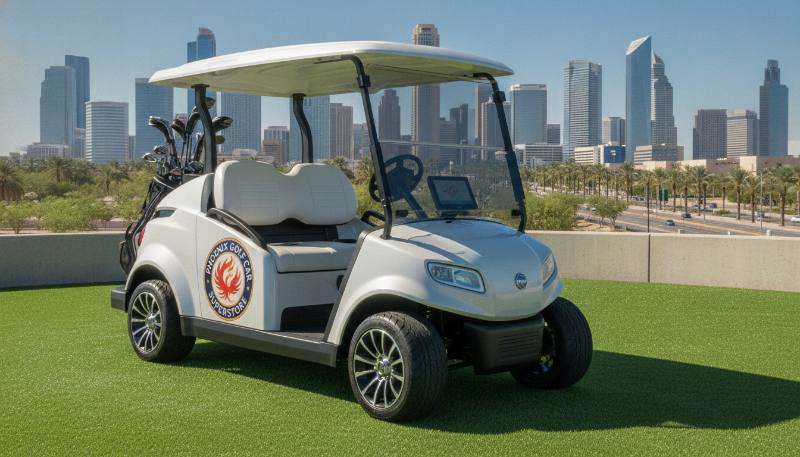
The demands of modern construction sites are constantly evolving, requiring innovative solutions to maintain efficiency and safety. Among the most impactful tools gaining traction are Construction Site Golf Carts. These robust utility vehicles are transforming how personnel and materials move across vast, challenging job sites, offering a blend of agility, power, and cost-effectiveness that traditional heavy machinery often cannot match. They are no longer just for the golf course; they are essential workhorses. In this comprehensive guide, we will explore 9 proven ways these specialized vehicles can significantly boost your on-site efficiency. We’ll delve into their essential features, compare gas and electric models, discuss maintenance, and provide insights into acquisition options. Discover how integrating the right utility vehicles can streamline operations, enhance productivity, and contribute to a safer, more organized construction environment. This is your blueprint for maximizing job site performance with smart transportation solutions.
Key Takeaways
- Understand how Construction Site Golf Carts dramatically cut down travel time for personnel and materials, directly impacting project timelines.
- Learn about the critical features and customizations that transform standard golf carts into heavy-duty utility vehicles capable of tackling rugged terrain.
- Discover the economic and environmental advantages of electric models versus gas-powered options for diverse construction environments.
- Explore the importance of regular maintenance and adherence to safety guidelines to ensure the longevity and safe operation of your fleet of Construction Site Golf Carts.
- Identify leading manufacturers and reliable sources for purchasing or renting high-performance utility golf carts tailored for demanding job site conditions.
Understanding Construction Site Golf Carts: Essential Benefits for Your Job Site
The modern construction landscape demands agility and efficiency. Large job sites, sprawling over acres, often present significant logistical challenges for moving personnel, tools, and lighter materials. This is where Construction Site Golf Carts step in as invaluable assets, offering solutions that enhance productivity and safety in ways traditional vehicles cannot. Their compact size and maneuverability allow them to navigate tight spaces and rough terrain, making them indispensable for dynamic work environments.
Why Construction Site Golf Carts are Gaining Popularity
Golf carts are gaining popularity on large construction projects due to a confluence of factors that directly address common operational pain points. They offer a cost-effective alternative to larger trucks or utility vehicles for many tasks, reducing fuel consumption and maintenance expenses. Their smaller footprint also means less ground disturbance, which is crucial on sensitive sites. This makes them a smart investment for any project manager looking to optimize resources.The ability of Construction Site Golf Carts to quickly transport workers and supervisors across vast distances significantly cuts down on unproductive walk times. This immediate access to different work zones means faster response to issues, quicker delivery of forgotten tools, and overall improved communication. This efficiency translates directly into saved labor hours and accelerated project timelines.
Primary Benefits of Using Construction Site Golf Carts
The primary benefits of using golf carts on construction sites are multifaceted, touching upon efficiency, safety, and operational costs. Firstly, they provide rapid transportation for personnel, ensuring workers spend more time on tasks and less time walking. This is particularly beneficial on large, spread-out sites where distances between work areas can be substantial.Secondly, Construction Site Golf Carts are excellent for light material transport. Equipped with cargo beds, they can carry tools, small equipment, safety gear, and supplies directly to where they are needed, reducing manual labor and the risk of injury. Their versatility makes them ideal for a range of tasks, from surveying to quality control checks. Lastly, their smaller size and lower speeds inherently contribute to a safer work environment, especially in congested areas where larger vehicles might pose a greater risk. This blend of attributes makes them a compelling choice for modern construction. 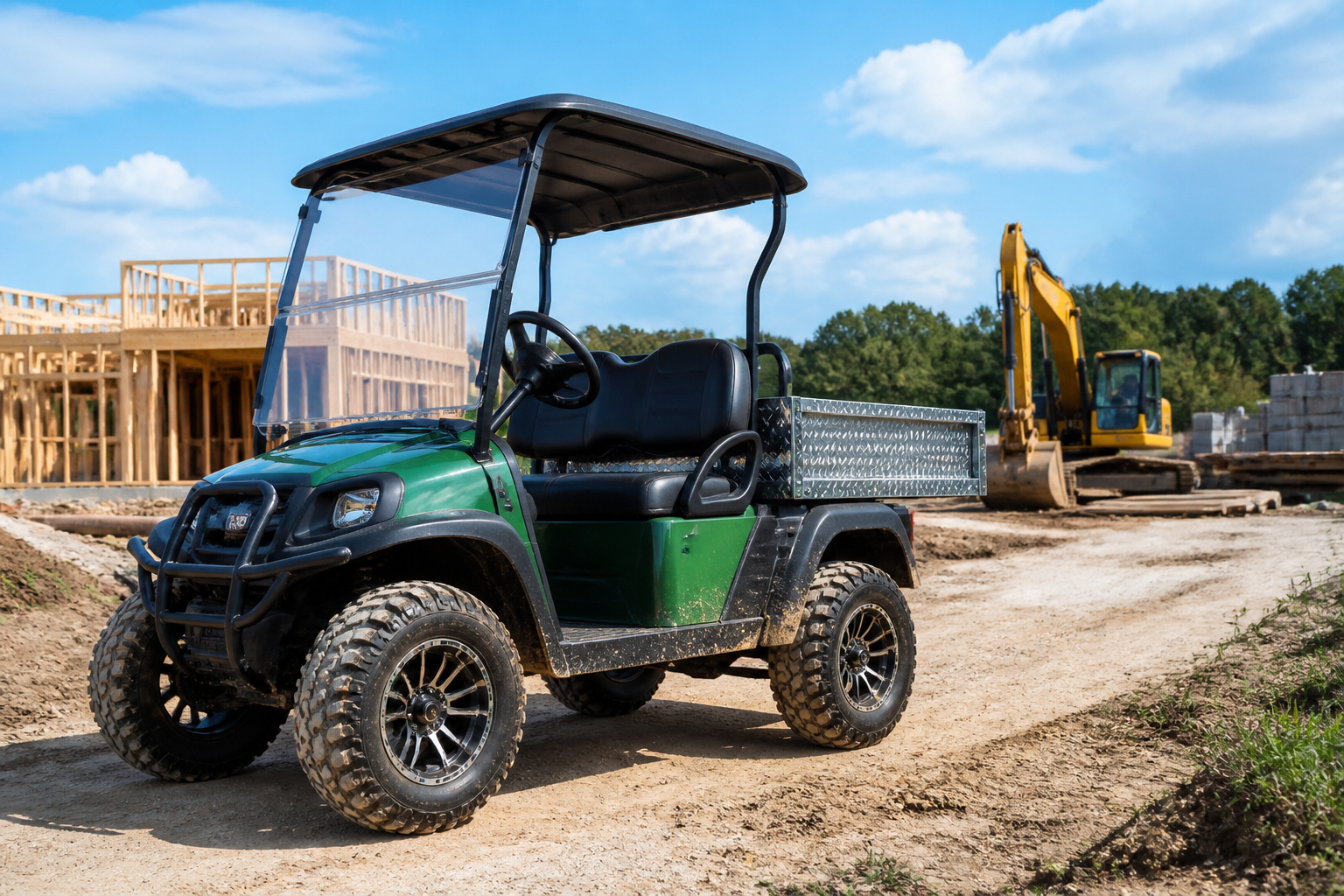
Key Features and Customization for Construction Site Golf Carts
To truly excel on a job site, a golf cart needs to be more than just a recreational vehicle. It requires specific features and often extensive customization to withstand the rigors of construction work. These enhancements ensure durability, safety, and functionality, transforming a standard model into a heavy-duty utility vehicle capable of handling demanding tasks. Understanding these features is crucial when selecting or upgrading your fleet of Construction Site Golf Carts.
Essential Features for a Robust Construction Site Golf Cart
What essential features should a construction site golf cart possess? A robust frame is paramount, often made from heavy-gauge steel to endure impacts and heavy loads. Heavy-duty suspension systems are critical for absorbing shocks from uneven terrain, protecting both the vehicle and its occupants. All-terrain tires with aggressive tread patterns provide superior traction on dirt, gravel, and mud, preventing slippage and improving stability.A powerful engine, whether gas or electric, is necessary to handle inclines and carry significant payloads. Payload capacity is a key consideration, with many utility models designed to carry 800-1500 lbs. Durable cargo beds, often made of steel or reinforced plastic, are essential for hauling materials. Finally, safety features like headlights, taillights, turn signals, horns, and seatbelts are non-negotiable for compliance and worker protection. Lift kits and weather enclosures also offer significant benefits for challenging conditions.
Modifying Standard Golf Carts for Light Construction Duties
How can a standard golf cart be modified or upgraded for light construction duties? While purpose-built utility vehicles are ideal, a standard golf cart can be adapted for less intensive tasks. The first step is to upgrade the tires to heavy-duty, all-terrain options for improved traction and puncture resistance. A lift kit can increase ground clearance, allowing the cart to navigate minor obstacles more easily.Adding a rear cargo box or a small flatbed is essential for carrying tools and supplies. Reinforcing the suspension can help manage heavier loads, though it’s important to stay within the vehicle’s overall weight limits. Basic safety accessories like a horn, mirrors, and perhaps a flashing beacon are also vital. For increased power, engine or motor upgrades might be considered, but always consult with a professional to ensure modifications are safe and effective for your Construction Site Golf Carts.
Specialized Accessories and Attachments for Construction Site Golf Carts
Where can I find specialized accessories and attachments for construction site golf carts? Specialized accessories significantly enhance the utility of these vehicles. Cargo boxes, often made of durable steel or aluminum, can be customized with tool holders, dividers, and locking mechanisms. Ladder racks are invaluable for electricians, plumbers, and roofers. Winches can be added for light towing or recovery tasks.Utility beds can be configured as dump beds for debris or flatbeds for oversized items. Specialized lighting, such as LED light bars or spotlights, improves visibility during early morning or late evening operations. These attachments can be sourced from golf car dealerships, aftermarket parts suppliers like Madjax, and online retailers specializing in utility vehicle upgrades. Phoenix Golf Car Superstore offers a wide range of these accessories, ensuring your Construction Site Golf Carts are perfectly equipped for any job.
Maximize Efficiency with Construction Site Golf Carts from Phoenix Golf Car Superstore
Streamline operations and enhance productivity on your job site with our heavy-duty utility vehicles. We offer sales, rentals, and custom solutions designed for the toughest construction environments.
Choosing the Right Construction Site Golf Carts: Gas vs. Electric & Top Brands
The decision between gas and electric models, along with selecting a reputable manufacturer, is crucial for optimizing your fleet of Construction Site Golf Carts. Each power source offers distinct advantages, and certain brands have established themselves as leaders in producing rugged, reliable utility vehicles for demanding industrial environments. Making an informed choice ensures your investment aligns with your operational needs and site conditions.
Gas vs. Electric Construction Site Golf Carts for Diverse Environments
Which type of golf cart, gas or electric, is more suitable for diverse construction environments? Both gas and electric Construction Site Golf Carts have their merits. Gas models typically offer a longer range on a single tank and can be refueled quickly, making them ideal for remote sites without easy access to charging infrastructure or for extended shifts. They also tend to have more raw power for climbing steep grades or hauling heavier loads.Electric models, conversely, are quieter, produce zero emissions, and have lower maintenance requirements due to fewer moving parts. This makes them perfect for indoor use, noise-sensitive areas, or projects with strict environmental regulations. They are also generally more energy-efficient for shorter, frequent trips. The best choice ultimately depends on your specific site conditions, operational hours, and access to power or fuel.
Leading Manufacturers of Electric Utility Vehicles for Job Sites
Who are the leading manufacturers of electric utility vehicles suitable for job sites? Several reputable brands excel in producing electric utility vehicles designed for the rigors of construction. E-Z-GO, with its Hauler series, offers robust electric models known for their durability and cargo capacity. Club Car’s Carryall series, particularly models like the Carryall 500 or 700, provides reliable electric options with versatile cargo solutions.Yamaha’s Drive2 Fleet & Utility line also includes electric models built for commercial applications, emphasizing efficiency and performance. Cushman, a brand under Textron Specialized Vehicles (which also owns E-Z-GO), is specifically focused on industrial and commercial utility vehicles, offering a wide range of heavy-duty electric models. These manufacturers consistently deliver quality and innovation in the electric utility vehicle segment, making them top contenders for your Construction Site Golf Carts fleet.
Brands Offering Rugged Construction Site Golf Carts
What specific brands offer rugged golf carts built for challenging construction conditions? When it comes to enduring the harsh realities of a construction site, certain brands stand out for their robust engineering and heavy-duty capabilities. E-Z-GO, particularly their Hauler Pro-X and Cushman models, are designed with stronger chassis, enhanced suspensions, and powerful drivetrains to handle rough terrain and heavy loads.Club Car’s Carryall series, such as the Carryall 700 or 1500, are also highly regarded for their durability and versatility in industrial settings. Yamaha’s utility models are known for their reliable performance and ability to withstand demanding use. These manufacturers prioritize features like reinforced frames, heavy-duty tires, and powerful engines to ensure their Construction Site Golf Carts can perform reliably day in and day out on the toughest job sites. 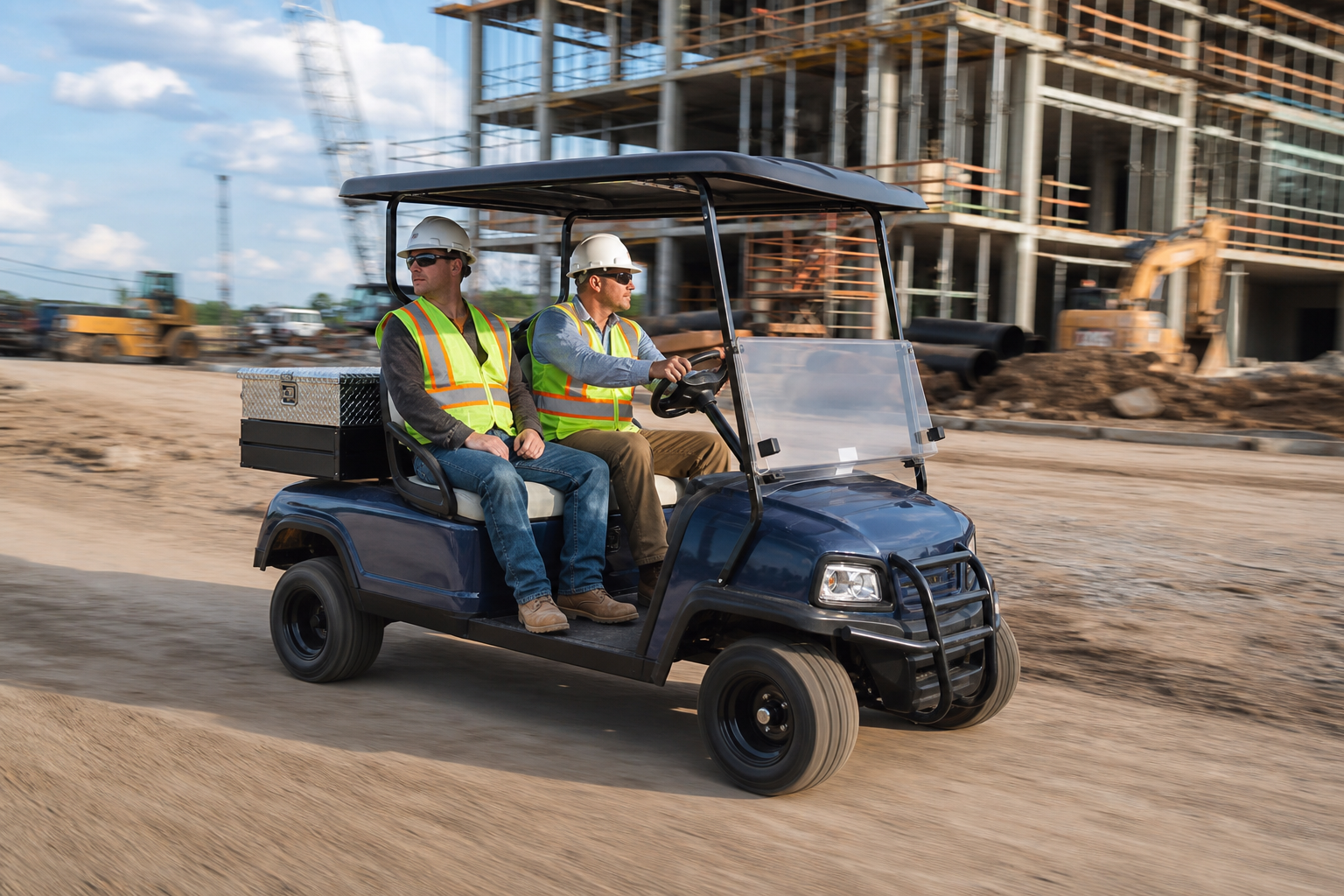
Operational Aspects: Safety, Maintenance, and Capacity of Construction Site Golf Carts
Effective management of Construction Site Golf Carts extends beyond initial purchase; it encompasses rigorous safety protocols, diligent maintenance, and a clear understanding of their operational limits. These aspects are critical for maximizing the lifespan of your vehicles, ensuring worker safety, and maintaining peak efficiency on the job site. Neglecting any of these areas can lead to costly downtime, accidents, and reduced productivity.
Safety Guidelines for Operating Construction Site Golf Carts
What safety guidelines and regulations apply to operating golf carts on active construction sites? Operating Construction Site Golf Carts requires strict adherence to safety guidelines to prevent accidents and injuries. Mandatory Personal Protective Equipment (PPE), such as hard hats, safety glasses, and high-visibility vests, should be worn by all operators and passengers. Designated travel paths should be established and clearly marked, keeping carts away from heavy machinery and active work zones where possible.Speed limits must be enforced, typically much lower than public road limits, to account for uneven terrain and pedestrian traffic. Operators must receive proper training, covering safe driving practices, vehicle limitations, and emergency procedures. Proper loading procedures are also vital to prevent rollovers or loss of control; loads must be secured and within the cart’s payload capacity. Regulations may vary by state and site, often mirroring general vehicle safety standards for industrial environments, such as those outlined by OSHA for powered industrial trucks.OSHA guidelines for powered industrial trucks provide a good reference point for general safety practices.
Servicing and Maintaining Your Construction Site Golf Cart
How often should a Construction Site Golf Cart be serviced and maintained? Regular preventative maintenance is crucial for the longevity and reliable performance of construction site golf carts. Typically, these vehicles should undergo service every 3-6 months or after a specified number of operating hours, such as 200-250 hours, depending on the intensity of use and manufacturer recommendations. This schedule helps identify and address minor issues before they escalate into major problems.Key maintenance tasks include checking fluid levels (oil, coolant, brake fluid for gas models; battery water for electric models), inspecting tire pressure and tread wear, and examining brake systems for proper function. Battery health, electrical connections, and charging systems should be regularly assessed for electric carts. For gas carts, spark plugs, air filters, and fuel lines require periodic inspection and replacement. Adhering to a strict maintenance schedule minimizes downtime and extends the operational life of your fleet.
Typical Payload Capacity of a Construction-Grade Golf Cart
What is the typical payload capacity of a construction-grade golf cart? The typical payload capacity for a construction-grade golf cart varies significantly based on its design and intended use, but most heavy-duty utility models are engineered to carry substantial loads. Generally, you can expect these vehicles to handle between 800 lbs to 1,500 lbs (approximately 360 kg to 680 kg).This capacity is crucial for transporting tools, equipment, and materials like bags of cement, lumber, or plumbing supplies across the job site. Some specialized or extra-heavy-duty models, designed for more demanding industrial applications, can even exceed 2,000 lbs (900 kg). Always consult the manufacturer’s specifications to ensure you are operating within the safe payload limits of your specific Construction Site Golf Carts to prevent damage and ensure safety.
Best Tires for Rough Construction Site Terrain
What are the best types of tires for golf carts operating on rough or uneven construction terrain? For golf carts operating on rough or uneven construction terrain, standard turf tires are simply inadequate. The best types of tires are off-road or all-terrain (AT) tires. These tires feature an aggressive, knobby tread pattern that provides superior traction on loose surfaces like dirt, gravel, mud, and sand, which are common on job sites.Beyond traction, these tires are designed for enhanced durability and puncture resistance. Many are constructed with thicker sidewalls and reinforced compounds to withstand sharp objects and impacts. Steel-belted radials are often preferred for their added strength and longevity. Investing in the right tires is a critical upgrade for any Construction Site Golf Carts, ensuring stability, safety, and performance in challenging environments.
Acquiring Construction Site Golf Carts: Purchase and Rental Options
Deciding how to acquire Construction Site Golf Carts is a strategic business decision that depends on your project’s duration, budget, and long-term needs. Whether you choose to purchase new or used vehicles, or opt for a rental solution, understanding the market and available options is key to making a cost-effective and efficient choice for your operations.
Cost of a New Construction Site Golf Cart
How much does it cost to buy a new golf cart specifically designed for construction? The cost of a new construction-specific golf cart varies widely based on several factors, including features, payload capacity, power type (gas or electric), and the manufacturer. Basic utility models designed for light construction duties might start around $8,000-$12,000. These typically offer essential cargo space and a robust build.However, more rugged, high-capacity, or specialized vehicles, often equipped with advanced suspension, larger engines, and enhanced safety features, can range from $15,000 to over $30,000. These higher-end models are built to withstand the most demanding job site conditions and offer greater versatility. It’s an investment that pays off in increased efficiency and reduced manual labor.
Where to Purchase Heavy-Duty Utility Golf Carts
Where can I purchase heavy-duty utility golf carts for construction site use? Heavy-duty utility golf carts for construction site use can be purchased from several reliable sources. Specialized golf car dealerships, like Phoenix Golf Car Superstore, are often the best option as they offer a wide selection of commercial and industrial models, along with expert advice, service, and customization options. These dealerships typically carry top brands and can help you configure a vehicle to your exact specifications.Equipment rental companies that also sell used or new equipment are another viable option, especially if you’re looking for a balance between cost and performance. Additionally, you can purchase direct from manufacturers or through their authorized dealer networks. When choosing a vendor, prioritize those that offer comprehensive after-sales support, including parts and maintenance services, to ensure the longevity of your Construction Site Golf Carts.
Renting Construction Site Golf Carts for Temporary Projects
Can I rent Construction Site Golf Carts for temporary projects? Yes, renting construction site-ready golf carts is an excellent and flexible solution for temporary projects, short-term needs, or when you need to expand your existing fleet without a significant capital investment. Many companies, including Phoenix Golf Car Superstore, offer rental services for utility golf carts specifically equipped for construction environments.Rentals are typically available on a daily, weekly, or monthly basis, allowing you to scale your fleet up or down as project demands change. This option eliminates the need for long-term maintenance commitments and provides access to the latest models and features without the upfront cost of ownership. Renting is particularly advantageous for projects with fluctuating needs or for testing different types of Construction Site Golf Carts before committing to a purchase.The integration of Construction Site Golf Carts into your operations is not merely an upgrade; it is a strategic enhancement that addresses critical needs for efficiency, safety, and cost-effectiveness. From rapid personnel transport to versatile material handling, these vehicles prove their worth daily on demanding job sites. By understanding their features, choosing the right models, and committing to proper maintenance and safety, you can unlock their full potential. Investing in these utility vehicles means investing in a smoother, more productive, and ultimately more profitable construction project. Embrace the power of specialized transportation and watch your on-site efficiency soar.
What are the primary benefits of using golf carts on construction sites?
Construction site golf carts significantly enhance efficiency and safety. They provide quick transportation for personnel and tools across large job sites, reducing walk times and improving response to critical needs. Their compact size allows access to confined areas, and many models offer ample cargo space for materials.
How much does it cost to buy a new golf cart specifically designed for construction?
The cost of a new construction-specific golf cart varies widely based on features, payload capacity, power type (gas or electric), and manufacturer. Basic utility models might start around $8,000-$12,000, while more rugged, high-capacity, or specialized vehicles can range from $15,000 to over $30,000.
Where can I purchase heavy-duty utility golf carts for construction site use?
Heavy-duty utility golf carts for construction site use can be purchased from specialized golf car dealers like Phoenix Golf Car Superstore, equipment rental companies that also sell, and direct from manufacturers. Look for authorized dealers that offer sales, service, and custom modifications.
What essential features should a construction site golf cart possess?
Essential features for construction site golf carts include a robust frame, heavy-duty suspension, all-terrain tires, a powerful engine (gas or electric), significant payload capacity, durable cargo beds, and safety features like headlights, taillights, horn, and seatbelts. Lift kits and weather enclosures are also beneficial.
Who are the leading manufacturers of electric utility vehicles suitable for job sites?
Leading manufacturers known for electric utility vehicles suitable for job sites include E-Z-GO (Hauler series), Club Car (Carryall series), Yamaha (Drive2 Fleet & Utility), and Cushman. These brands offer a range of models designed for commercial and industrial applications.
Why are golf carts becoming popular transportation on large construction projects?
Golf carts are gaining popularity on large construction projects due to their fuel efficiency, maneuverability, lower operating costs compared to larger vehicles, and reduced environmental impact (especially electric models). They are ideal for quick trips, personnel transport, and light material hauling, saving time and labor.
How often should a construction site golf cart be serviced and maintained?
Construction site golf carts should undergo regular preventative maintenance, typically every 3-6 months or after a specified number of operating hours (e.g., 200-250 hours), depending on usage intensity and manufacturer recommendations. This includes checking fluids, tires, brakes, batteries, and electrical systems.
What safety guidelines and regulations apply to operating golf carts on active construction sites?
Operating construction site golf carts requires adherence to strict safety guidelines. This includes mandatory PPE, designated travel paths, speed limits, proper loading procedures, and operator training. Regulations may vary by state and site, often mirroring general vehicle safety standards for industrial environments.
Can I rent construction site-ready golf carts for temporary projects?
Yes, many companies, including Phoenix Golf Car Superstore, offer rental services for construction site-ready golf carts. Rentals are available daily, weekly, or monthly, providing a flexible solution for temporary projects or when expanding an existing fleet without a significant capital investment.
What is the typical payload capacity of a construction-grade golf cart?
The typical payload capacity for a construction-grade golf cart varies, but most heavy-duty utility models can carry between 800 lbs to 1,500 lbs (approximately 360 kg to 680 kg). Specialized or extra-heavy-duty models may exceed 2,000 lbs (900 kg) for specific applications.
Which type of golf cart, gas or electric, is more suitable for diverse construction environments?
Both gas and electric construction site golf carts have advantages. Gas models offer longer range and quick refueling, ideal for remote sites without charging infrastructure. Electric models are quieter, produce zero emissions, and have lower maintenance, making them suitable for indoor use or noise-sensitive areas. The choice depends on site-specific needs.
Where can I find specialized accessories and attachments for construction site golf carts?
Specialized accessories and attachments for construction site golf carts, such as cargo boxes, ladder racks, tool holders, winches, utility beds, and specialized lighting, can be found at golf car dealerships, aftermarket parts suppliers like Madjax, and online retailers specializing in utility vehicle upgrades.
What specific brands offer rugged golf carts built for challenging construction conditions?
Brands known for offering rugged construction site golf carts suitable for challenging conditions include E-Z-GO (especially their Hauler Pro-X and Cushman models), Club Car (Carryall series like the 700 or 1500), and Yamaha (utility models). These are designed with stronger chassis and enhanced suspensions.
How can a standard golf cart be modified or upgraded for light construction duties?
A standard golf cart can be modified for light construction duties by adding heavy-duty tires, a lift kit for ground clearance, a rear cargo box or flatbed, reinforced suspension, and basic safety accessories like a horn and mirrors. Engine or motor upgrades might also be considered for increased torque.
What are the best types of tires for golf carts operating on rough or uneven construction terrain?
For rough or uneven construction terrain, the best types of tires for construction site golf carts are off-road or all-terrain tires with an aggressive tread pattern. These provide superior traction, puncture resistance, and improved stability compared to standard turf tires. Steel-belted radials are often preferred for durability.