
Golf Cart Battery Care: 5 Proven Tips for Arizona Carts
Golf Cart Battery Care is paramount for anyone looking to maximize the performance and extend the lifespan of their electric golf cart, especially in the demanding Arizona climate. The extreme heat and unique environmental factors here can significantly impact battery health, making diligent maintenance not just a recommendation, but a necessity. Understanding the specific needs of your deep-cycle batteries will ensure reliable power, prevent costly replacements, and keep you enjoying the greens without interruption.
This comprehensive guide will walk you through five proven strategies for effective Golf Cart Battery Care. We will delve into proper watering techniques, optimal charging practices, and crucial storage considerations. By adopting these expert tips, you can significantly enhance your golf cart’s efficiency and longevity, ensuring it remains a dependable companion for years to come.
Key Takeaways for Optimal Golf Cart Battery Care
- Master essential watering techniques to prevent premature battery failure, a critical aspect of Golf Cart Battery Care in hot climates.
- Implement smart charging habits to avoid overcharging and undercharging, which are detrimental to battery health and longevity.
- Understand the specific challenges Arizona’s climate poses to golf cart batteries and how to mitigate them effectively.
- Learn to identify early signs of battery issues to address them promptly, saving you from unexpected breakdowns and expensive repairs.
- Discover the importance of professional battery services and quality replacements for sustained performance and peace of mind.
Understanding Essential Golf Cart Battery Care
Proper Golf Cart Battery Care is the cornerstone of a long-lasting and efficient electric golf cart. These deep-cycle batteries are designed for sustained power delivery, but they require consistent attention to perform at their best. Neglecting basic maintenance can lead to reduced range, slower speeds, and a significantly shortened lifespan, ultimately costing you more in the long run.
The proper way to care for golf cart batteries involves several key practices. These include regular electrolyte level checks, correct charging cycles, keeping terminals clean, and ensuring adequate ventilation. Adhering to these steps will not only extend the life of your batteries but also ensure your golf cart is always ready for the course or neighborhood.
The Role of Proper Watering in Golf Cart Battery Care
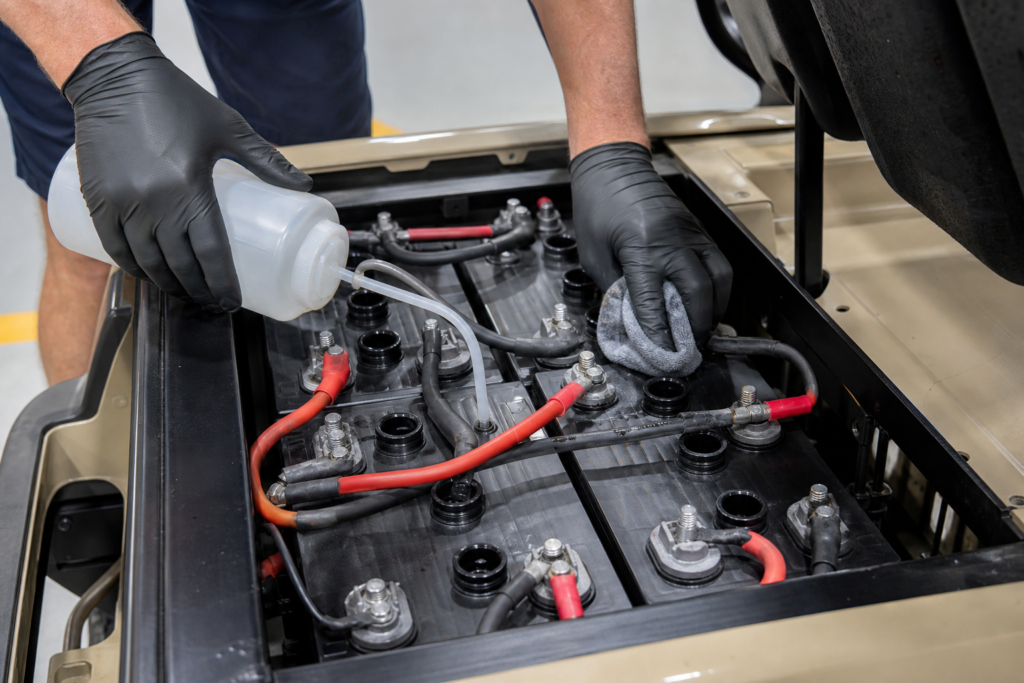
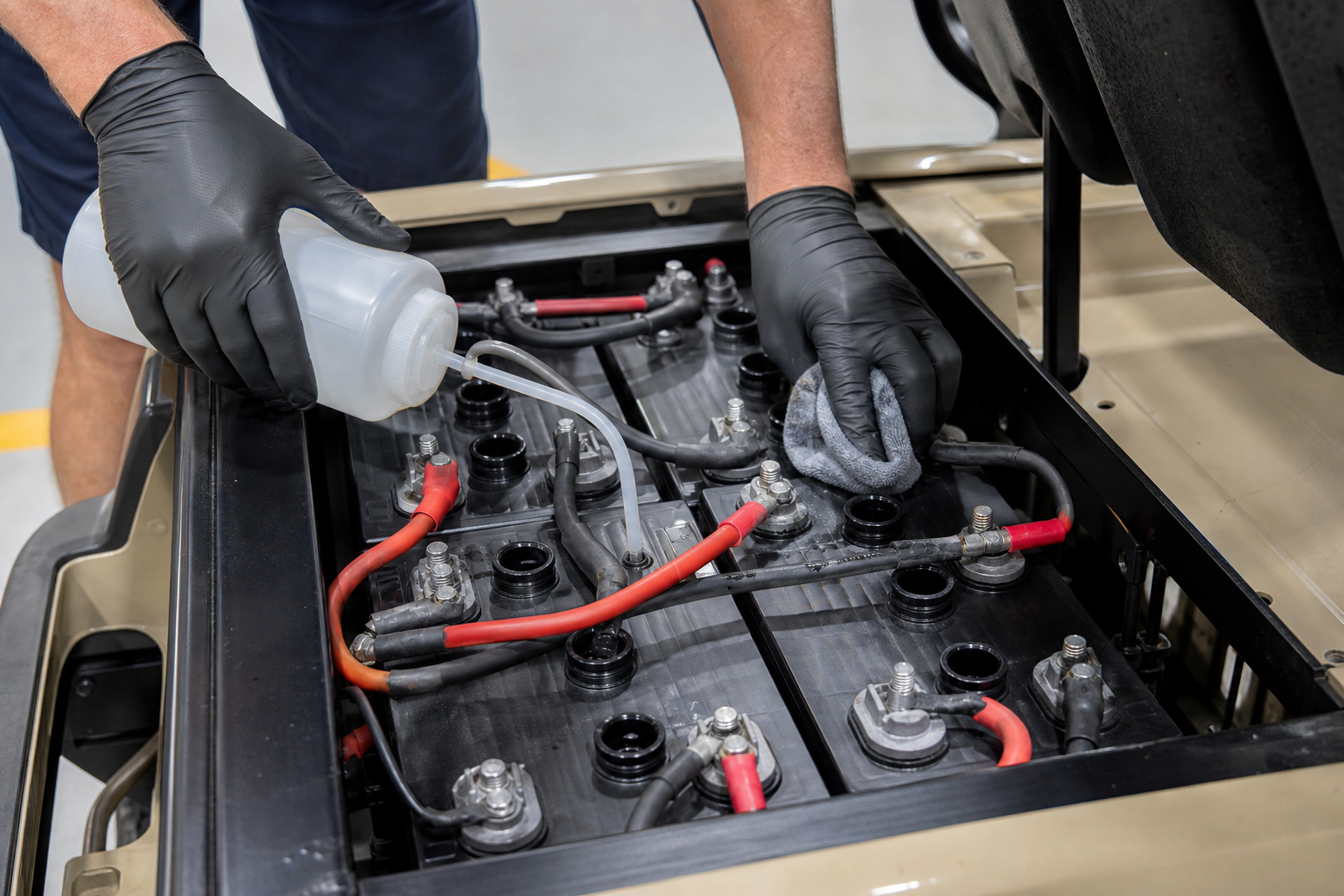
Watering is perhaps the most critical aspect of lead-acid Golf Cart Battery Care. As batteries charge, the electrolyte (a mixture of sulfuric acid and water) can evaporate, especially in hot climates like Arizona. Maintaining the correct water level is vital for the chemical reactions within the battery cells.
You should check your golf cart battery water levels monthly, or every 2-4 weeks if your golf cart is used frequently. Always add distilled water just after charging, ensuring the plates are covered by about 1/2 inch but never overfilling the cells. Only distilled water is recommended for optimal Golf Cart Battery Care.
Tap water contains minerals and impurities such as iron and chlorine that can accumulate on battery plates, leading to damaging sulfation and a significantly shortened battery life over time.
Charging Habits for Optimal Golf Cart Battery Care
Consistent and correct charging is fundamental to effective Golf Cart Battery Care. Deep-cycle batteries thrive on full charge cycles. It is generally recommended to charge your golf cart batteries after every ride, regardless of how short the trip was. This practice helps prevent sulfation, a common cause of battery degradation.
However, it is equally important to avoid overcharging. Yes, golf cart batteries can be severely damaged by overcharging. This process can cause the electrolyte to boil, accelerate plate corrosion, and drastically reduce their lifespan. Always use an automatic charger equipped with an auto-shutoff feature to prevent overcharging as part of effective Golf Cart Battery Care. This ensures your batteries receive the precise amount of charge needed without harm.
Why Your Golf Cart Batteries Need Special Care in Arizona
Arizona’s climate presents unique challenges for Golf Cart Battery Care. The intense summer heat can accelerate electrolyte evaporation, increase internal resistance, and hasten the degradation of battery components. Without specific precautions, batteries in Arizona golf carts may experience a significantly reduced lifespan compared to those in cooler regions.
High temperatures can cause batteries to self-discharge faster and lead to a phenomenon known as
Need Expert Golf Cart Battery Care or Replacement in Florida?
Don’t let failing batteries sideline your golf cart. Phoenix Golf Car Superstore offers comprehensive battery diagnostics, expert care, and premium replacements to keep you on the course. Trust our certified technicians for reliable service and extended battery life.
Frequently Asked Questions About Golf Cart Battery Care
What is the proper way to care for golf cart batteries?
Proper golf cart battery care involves regular watering with distilled water, keeping terminals clean and tight, maintaining a full charge, avoiding deep discharges, and storing them correctly. These practices maximize performance and significantly extend their lifespan.
How often should I add water to my golf cart batteries?
You should check your golf cart battery care water levels monthly, or every 2-4 weeks if your golf cart is used frequently. Always add distilled water just after charging, ensuring the plates are covered by about 1/2 inch but never overfilling the cells.
Why are my golf cart batteries losing charge so fast?
Golf cart batteries losing charge fast can indicate several issues, including consistent undercharging, sulfation buildup on the plates, natural old age, loose or corroded connections, or a parasitic electrical drain from accessories. Consistent golf cart battery care can often mitigate these problems.
What are the symptoms of a failing golf cart battery?
Symptoms of a failing golf cart battery include significantly reduced range, slower acceleration, abnormally long charging times without reaching full capacity, visible corrosion around terminals, bulging battery cases, or a distinct sulfur-like odor. Prompt action with proper golf cart battery care can sometimes delay full replacement.
How long do golf cart batteries usually last?
With diligent golf cart battery care, deep-cycle batteries typically provide 3-5 years of reliable service. However, their lifespan can vary significantly based on how frequently the cart is used, your charging habits, and environmental conditions like extreme temperatures.
Can golf cart batteries be overcharged?
Yes, golf cart batteries can be severely damaged by overcharging. This process can cause the electrolyte to boil, accelerate plate corrosion, and drastically reduce their lifespan. Always use an automatic charger equipped with an auto-shutoff feature to prevent overcharging as part of effective golf cart battery care.
What type of water is best for golf cart batteries?
Only distilled water is recommended for optimal golf cart battery care. Tap water contains minerals and impurities such as iron and chlorine that can accumulate on battery plates, leading to damaging sulfation and a significantly shortened battery life over time.
Where can I find golf cart battery replacement services?
You can find reliable golf cart battery replacement services at reputable dealerships and specialized service centers, such as Phoenix Golf Car Superstore. They offer expert diagnostics, professional installation of new batteries, and responsible disposal of your old battery set.
Learn more from authoritative resources: Consumer Reports and HGTV.